
Molybdenum
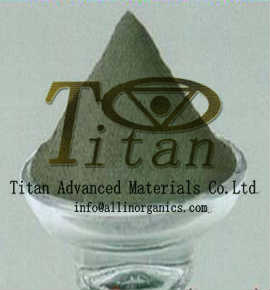
- Số CAS
- 7439-98-7
- Khối lượng phân tử
- Công thức phân tử / ký hiệu hóa học
- Mo
Mô tả
Molybdenum is a Block D, Group 6, Period 5 element. The number of electrons in each of Molybdenum‘s shells is 2, 8, 18, 13, 1 and its electronic configuration is [Kr] 4d5 5s1. In its elemental form molybdenum‘s CAS number is 7439-98-7. The molybdenum atom has a radius of 136.3.pm and it‘s Van der Waals radius is 200.pm. Molybdenum is toxic unless it is in small quantities. Molybdenum has the third highest melting point of any element, exceeded only by tungsten and tantalum. Molybdenum is a catalyst in the oil refining. It has many other applications, including in catalysts, pigments, corrosion inhibitors and lubricants. It has a very high elastic modulus. Molybdenum is available as metal and compounds with purities from 99% to 99.999% (ACS grade to ultra-high purity); metals in the form of foil, sputtering target, and rod, and compounds as submicron and nanopowder. It is used in steel alloys to add hardness and raise melting points. It is a component in Hastelloys brand steel.
ỨNG DỤNG
It is used in steel alloys to add hardness and raise melting points. It is a component in Hastelloys brand steel. Molybdenum is used in nuclear reactors and aerospace components. The primary commercial source of molybdenum is molybdenite (MoS2), although it is also recovered as a byproduct of copper and tungsten mining.
Phiếu kiểm nghiệm
Abundance. The following table shows the abundance of molybdenum and each of its naturally occurring isotopes on Earth along with the atomic mass for each isotope.
|
Isotope |
Atomic Mass |
% Abundance on Earth |
|
Mo-92 |
91.906810 |
14.84 |
|
Mo-94 |
93.905088 |
9.25 |
|
Mo-95 |
94.905841 |
15.92 |
|
Mo-96 |
95.904679 |
16.68 |
|
Mo-97 |
96.906021 |
9.55 |
|
Mo-98 |
97.905408 |
24.13 |
|
Mo-100 |
99.907477 |
9.63 |
The following table shows the abundance of Molybdenum present in the human body and in the universe scaled to parts per billion (ppb) by weight and by atom:
|
|
Typical Human Body |
Universe |
|
by Weight |
100 ppb |
5 ppb |
|
by Atom |
7 ppb |
0.1 ppb |
Safety Data and Biological Role. The safety data for molybdenum metal, nanoparticles and its compounds can vary widely depending on the form. For potential hazard information, toxicity, and road, sea and air transportation limitations, such as DOT Hazard Class, DOT Number, EU Number, NFPA Health rating and RTECS Class, please see the specific material or compound referenced in the left margin. Molybdenum compounds have a vital biological role in nitrogen fixation, enzymes, and nitrate reduction enzymes.
Ionization Energy. The ionization energy for molybdenum (the least required energy to release a single electron from the atom in it's ground state in the gas phase) is stated in the following table:
|
1st Ionization Energy |
684.32 kJ mol-1 |
|
2nd Ionization Energy |
1559.21 kJ mol-1 |
|
3rd Ionization Energy |
2617.67 kJ mol-1 |
Conductivity. As to molybdenum's electrical and thermal conductivity, the electrical conductivity measured as to electrical resistivity @ 20 ?C is 5.34 μΩcm and its electronegativities (or its ability to draw electrons relative to other elements) is 2.16. The thermal conductivity of molybdenum is 138 W m-1 K-1.
Thermal Properties. The melting point and boiling point for molybdenum are stated below. The following chart sets forth the heat of fusion, heat of vaporization and heat of atomization.
|
Heat of Fusion |
27.6 kJ mol-1 |
|
Heat of Vaporization |
589.9 kJ mol-1 |
|
Heat of Atomization |
656.55 kJ mol-1 |